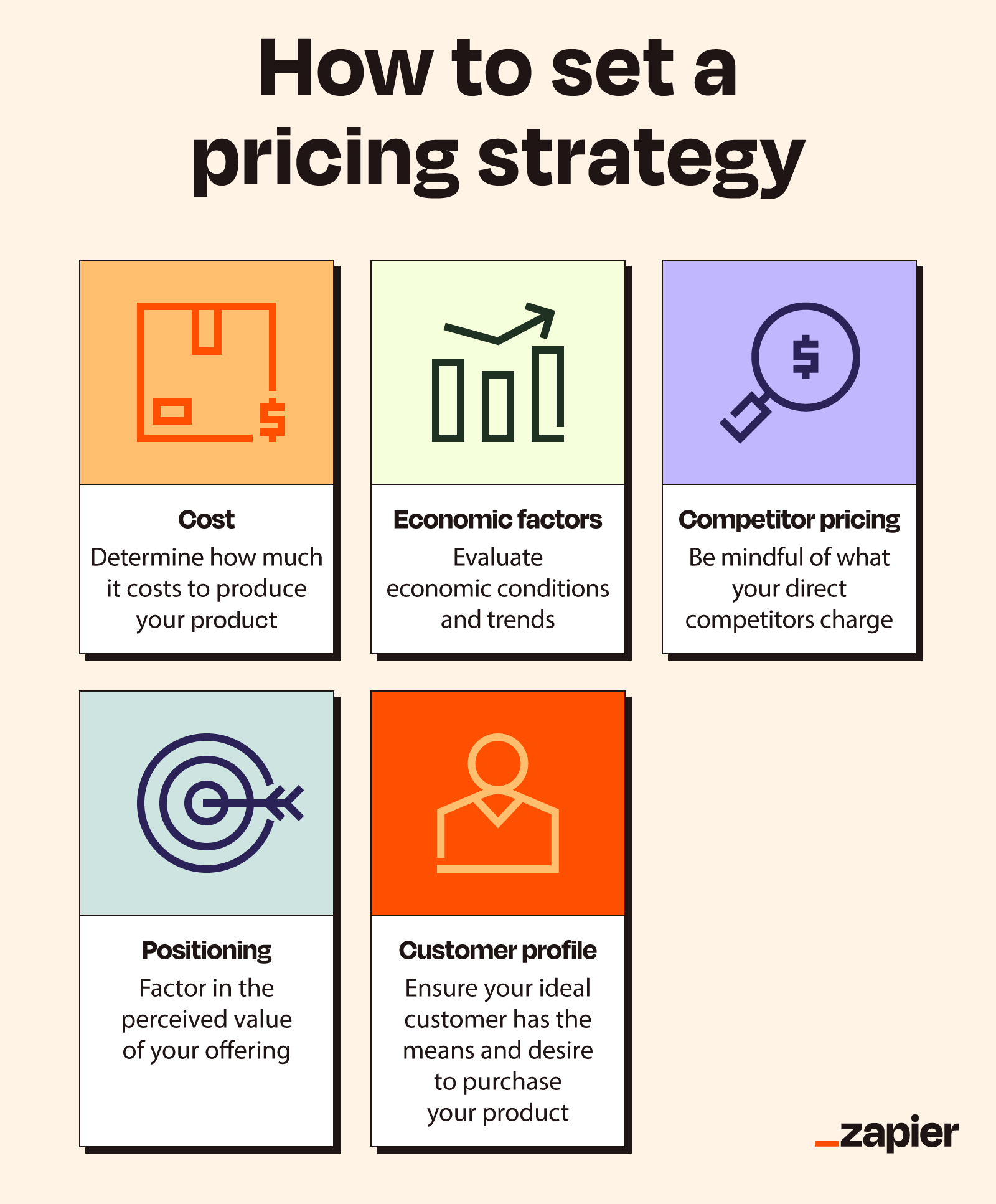
The Art of Pricing: Strategies to Attract Customers and Boost Sales
Ever walked into a store, saw something you absolutely had to have, checked the price tag, and then felt your soul slowly exit your body? Yeah, we've all been there. That, my friend, is the brutal reality of pricing gone wrong.
Let's be honest, pricing is like that awkward first date – you want to make a good impression, but you're terrified of scaring them away. Too high, and they'll run screaming to your competitor. Too low, and they'll think you're selling stolen goods or, worse, question your self-worth. (And nobody wants a therapy session at the checkout counter.)
But here's the thing: pricing isn't just about slapping a number on something and hoping for the best. It's an art. A delicate dance between perceived value, market trends, and your own sanity. It's about understanding why someone is willing to pay $5 for a cup of coffee at that fancy cafe, but balks at paying $2 for the exact same coffee brewed at home (even though you secretly suspect yours is better).
Maybe you're a small business owner staring at a spreadsheet, wondering if you should raise prices to cover your rising costs without triggering a customer revolt. Or perhaps you're a budding entrepreneur, agonizing over how to price your groundbreaking widget that solves a problem no one even knew they had. (Those are the best kind, aren't they?) Whatever your situation, the struggle is real.
Think of this article as your cheat sheet, your pricing guru, your… well, you get the idea. We're going to dive deep into the fascinating world of pricing strategies, from the psychology behind the numbers to the practical tips you can implement today to attract more customers and, yes, boost those sweet, sweet sales.
We'll explore:
- The dark arts (okay, maybe not *dark*, but definitely clever) of psychological pricing.
- How to understand your customer's perceived value (and how to influence it).
- The secrets to competitive pricing (without starting a price war you can't win).
- And much, much more!
So, buckle up, grab a beverage of your choice (preferably one you priced strategically!), and get ready to unlock the secrets to pricing success. Because let's face it, in the world of business, pricing isn't just a number – it's the key to unlocking your full potential. And who doesn't want a little more potential?
Ready to stop guessing and start strategizing? Let's get started!
The Art of Pricing: Strategies to Attract Customers and Boost Sales
Alright, friend, let's talk about something crucial for your business: pricing. Ever felt like you're leaving money on the table? Or maybe you're scaring potential customers away with prices that seem outta this world? You're not alone! Figuring out the right price is a major headache for many entrepreneurs. It's a delicate dance between attracting customers and actually making a profit. And let's be real, we all want to see those sales numbers go 📈📈📈. So, buckle up! We're about to dive into the art of pricing and learn some killer strategies to make your business thrive.
The Pricing Predicament: Why It's Such a Big Deal
Okay, so why is pricing such a big deal? Well, think about it from the customer's perspective. Price is often the first thing they see. It's a signal. It tells them something about the value of your product or service. Too high, and they might think you're overcharging. Too low, and they might question the quality (is this thing even legit?).
On the other hand, for you, pricing directly impacts your bottom line. Mess it up, and you could be running a business that looks busy but isn't actually making any money. Talk about a major buzzkill! So, getting your pricing right isn't just about slapping a random number on a product; it's about understanding your market, knowing your costs, and strategically positioning yourself for success. Ready to crack the code? Let's go!
Level Up Your Pricing Game: Killer Strategies That Actually Work
Alright, time to get down to business! Here are some seriously effective pricing strategies that you can implement today. No fluff, just actionable tips to help you attract customers and boost those sales.
1. Know Your Worth: The Cost-Plus Pricing Power-Up
Friend, you gotta know your costs! This is the foundation of any solid pricing strategy. Cost-plus pricing is exactly what it sounds like: you calculate your total costs (materials, labor, overhead – the whole shebang!) and then add a markup to determine your selling price.
Why it works:It ensures you're covering your expenses and making a profit. It's straightforward and relatively easy to implement.
How to do it:
- Calculate your total costs per unit.
- Determine your desired profit margin (e.g., 20%, 30%, whatever works for your biz).
- Add the profit margin to your cost per unit. Boom! You've got your price.
Real-life example:Let's say you're selling handmade candles. Your cost to make one candle (wax, wick, jar, fragrance) is $5. You want a 50% profit margin. Your selling price would be $5 + ($5 x 0.50) = $7.50.
2. Spy on the Competition: Competitive Pricing - Keeping It Real
Don't operate in a vacuum! Check out what your competitors are charging for similar products or services. Competitive pricing means setting your prices based on what your competition is doing. It's all about staying in the game, yo!
Why it works:It helps you stay relevant in the market and avoids pricing yourself out of contention. You can position yourself as more affordable or premium, depending on your strategy.
How to do it:
- Identify your key competitors.
- Research their pricing strategies (website, social media, even secretly visiting their store – sneaky!).
- Decide how you want to position yourself (cheaper, same price, or more expensive).
- Adjust your prices accordingly.
Pro Tip:Don't just blindly copy your competitors. Consider your unique value proposition. What makes your product or service better? That could justify a slightly higher price.
3. Value, Baby, Value: Value-Based Pricing – Sell the Experience
This is where things get interesting! Value-based pricing focuses on the perceived value of your product or service to the customer. It's not just about the cost of making something; it's about what it's worth to the person buying it. Think Apple. They ain't cheap, but people are willing to pay a premium for the brand, the design, and the ecosystem.
Why it works:You can charge a higher price if customers believe they're getting a lot of value. It focuses on the benefits and solutions you provide, rather than just the features.
How to do it:
- Understand your target audience's needs and pain points.
- Identify the benefits of your product or service that address those needs.
- Determine how much those benefits are worth to your customers.
- Set your price accordingly.
Example:A luxury skincare brand might charge a premium for its anti-aging cream because it's perceived to be highly effective and helps customers feel more confident. The cost of ingredients might be relatively low, but the perceived value is high.
4. Charm Them with Numbers: Psychological Pricing – Mind Games, Anyone?
This is where we get a little bit sneaky (but in a good way!). Psychological pricing uses pricing tactics to influence customer perceptions and behavior. Think about those prices that end in .99. It's a classic for a reason!
Why it works:It exploits psychological biases to make prices seem more appealing.
Common techniques:
- Charm pricing:Ending prices in .99 or .95 (e.g., $19.99 instead of $20). It makes the price seem significantly lower.
- Prestige pricing:Setting prices at round numbers (e.g., $100 instead of $99.99). It creates a perception of quality and luxury.
- Odd-even pricing:Using odd numbers (e.g., $7.95) to create a sense of value and even numbers (e.g., $8.00) to convey quality.
- Anchoring:Presenting a higher-priced item first to make the lower-priced items seem more affordable.
Example:A furniture store might display a $5,000 sofa prominently before showing a $2,500 sofa. The $2,500 sofa suddenly seems like a great deal, even though it's still a significant investment.
5. Sweeten the Deal: Promotional Pricing – Get Those Sales Rollin'
Everyone loves a good deal! Promotional pricing involves offering temporary price reductions to boost sales and attract new customers. Think sales, discounts, coupons, and limited-time offers.
Why it works:It creates a sense of urgency and encourages customers to make a purchase. It's a great way to clear out inventory or introduce a new product.
Types of promotional pricing:
- Sales:Offering discounts on specific products or categories for a limited time.
- Coupons:Providing codes or vouchers for discounts.
- Buy-one-get-one (BOGO) offers:Offering a free item when a customer purchases another item.
- Limited-time offers:Creating a sense of urgency with discounts that are only available for a short period.
Example:A clothing store might offer a 20% off sale for Black Friday or a BOGO offer on shoes.
6. Go with the Flow: Dynamic Pricing – Adapt and Conquer
This strategy is all about being flexible! Dynamic pricing involves adjusting prices in real-time based on factors like demand, competition, and market conditions. Airlines and hotels are masters of this game.
Why it works:It allows you to maximize revenue by capitalizing on fluctuations in demand. It's particularly effective for products or services with limited availability (e.g., concert tickets, hotel rooms).
How to do it:
- Use pricing software or algorithms to track market conditions and adjust prices automatically.
- Monitor your competitors' pricing.
- Consider factors like time of day, day of the week, and seasonality.
Example:An Uber driver might charge higher rates during rush hour or on a Friday night when demand is high.
Don't Be Afraid to Experiment (and Track Your Results!)
The key to mastering the art of pricing is experimentation! Don't be afraid to try different strategies and see what works best for your business. But here's the crucial part:track your results!Monitor your sales, profits, and customer feedback to see how your pricing changes are affecting your business.
Use analytics tools, A/B testing, and good old-fashioned customer surveys to gather data and refine your pricing strategy over time. Pricing is an ongoing process, not a one-time event. Stay adaptable, keep learning, and you'll be well on your way to pricing success!
Wrapping Up: You Got This!
Friend, pricing can seem daunting, but it doesn't have to be. By understanding the different pricing strategies and experimenting with what works best for your business, you can attract more customers, boost your sales, and build a thriving business. So, go out there, get your price on, and watch your profits soar! You got this!
Wrapping It Up: Your Ultimate Pricing Playbook
Alright, friend, we've journeyed deep into the captivating universe of pricing, unraveling the mysteries and equipping you with a kickass arsenal of strategies. We started with the fundamental truth that pricing isn't just about slapping a number on your product or service; it's about strategically positioning your offering in the market, understanding your customer's psyche, and ultimately, driving sustainable profitability. From the bedrock of cost-plus pricing, ensuring you cover your bases and make a respectable profit, to the art of competitive pricing, where you're essentially a secret agent, scoping out the competition and calibrating your prices accordingly. We then moved into the realms of value-based pricing, recognizing that perceived value is king, and psychological pricing, where you play mind games (in a totally ethical way, of course!) to influence buying behavior. And let's not forget the power of promotional pricing to create buzz and drive short-term sales spikes, and the dynamic dance of dynamic pricing, adapting to market forces in real-time. Each strategy, a vital piece of the puzzle, designed to help you conquer the pricing battlefield.
We've emphasized the critical importance of knowing your costs like the back of your hand, because without a solid understanding of your expenses, you're essentially flying blind. We've urged you to become a student of your competition, analyzing their pricing moves and positioning yourself strategically. But perhaps most importantly, we've hammered home the idea that pricing is intrinsically linked to value. What problem are you solving? What benefits are you offering? How much are those benefits worth to your customer? Answering these questions is paramount to unlocking the true potential of your pricing power.
This isn't just about increasing your prices across the board (although sometimes, that *is* the right move!). It's about creating a pricing strategy that aligns with your brand, your target audience, and your overall business goals. It's about understanding that pricing is a fluid, dynamic process, not a static, one-time decision. The market changes, customer preferences evolve, and your competitors are constantly on the move. You need to be agile, adaptable, and always ready to refine your pricing strategy to stay ahead of the game.
And remember, friend, data is your best ally in this endeavor. Track your results meticulously. Use analytics tools to monitor your sales, profits, and customer behavior. A/B test different pricing strategies to see what resonates with your audience. Gather feedback from your customers – what do they think of your prices? Are they getting good value for their money? This continuous cycle of analysis, experimentation, and refinement is the key to unlocking long-term pricing success.
Time to Level Up: Your Action Plan
Okay, enough theory. It's time to put these strategies into action! This isn't just about absorbing information; it's about implementing what you've learned and seeing tangible results. Consider this your personal call to action, your mission briefing, your opportunity to absolutely crush it in the pricing arena. So, what's next?
- Conduct a Pricing Audit:Start by taking a deep dive into your current pricing strategy. What are you charging for each of your products or services? How did you arrive at those prices? What are your costs? What are your competitors charging? Identify any areas where you might be leaving money on the table or where you're potentially scaring customers away. This audit will provide a baseline from which to measure your progress.
- Define Your Value Proposition:What makes your business unique? What value do you offer to your customers that your competitors don't? Articulate your value proposition clearly and concisely. This will be the foundation for your value-based pricing strategy.
- Segment Your Customers:Not all customers are created equal. Some are more price-sensitive than others. Segment your customer base based on their needs, preferences, and willingness to pay. This will allow you to tailor your pricing strategy to each segment.
- Experiment with Different Pricing Strategies:Don't be afraid to try new things! Test different pricing strategies on different products or services. A/B test different price points to see what maximizes your revenue. Use promotional pricing to drive short-term sales spikes. Get creative and see what works best for your business.
- Invest in Pricing Tools:Consider investing in pricing software or tools that can help you track your costs, monitor your competitors, and analyze your sales data. These tools can provide valuable insights and help you make more informed pricing decisions. There are tons of options out there, from basic spreadsheet templates to sophisticated AI-powered platforms. Find one that fits your needs and budget.
- Seek Expert Advice:If you're feeling overwhelmed or unsure where to start, consider seeking advice from a pricing consultant or mentor. These experts can provide guidance and support as you develop your pricing strategy. They can also help you identify potential pitfalls and avoid costly mistakes.
- Monitor, Analyze, Repeat:Remember, pricing is an ongoing process. Continuously monitor your results, analyze your data, and refine your pricing strategy over time. The market is constantly changing, so you need to be adaptable and responsive to stay ahead of the game. Don't get stuck in your ways – always be looking for ways to improve your pricing performance.
Seriously, friend, don't just bookmark this article and forget about it. Take action! Choose one or two of these steps and start implementing them today. Even small changes can have a big impact on your bottom line.
Ready to Rise and Grind? The Ultimate Motivation
Look, running a business is tough. There are days when you feel like you're drowning in a sea of challenges, when the numbers just don't add up, and when you're tempted to throw in the towel. But you know what? You've got this. You're resilient, you're resourceful, and you're passionate about what you do. And now, you're equipped with the knowledge and strategies to master the art of pricing.
Think about all the successful businesses you admire. They didn't get there by accident. They carefully crafted their pricing strategies, understood their customers, and continuously adapted to the market. They embraced experimentation, learned from their mistakes, and never stopped striving for improvement. You can do the same.
Don't let fear of failure hold you back. Don't let analysis paralysis keep you stuck in the mud. Take action, even if it's just a small step. Every action you take brings you closer to your goals. And remember, you're not alone. There's a whole community of entrepreneurs out there who are facing the same challenges and celebrating the same victories. Connect with them, learn from them, and support them along the way.
And most importantly, believe in yourself. Believe in your product or service. Believe in your ability to create value for your customers. Because when you believe in what you do, everything else falls into place. So, go out there, friend, and show the world what you're made of. Crush those pricing goals, achieve those revenue targets, and build the business of your dreams.
Seriously, the world needs what you have to offer. Don't hold back. Don't settle for mediocrity. Strive for excellence, and never stop learning and growing. The sky's the limit, and you're ready to soar.
Parting Thoughts: One Last Zing
Okay, friend, we've reached the end of our pricing adventure. I hope you found this article helpful and inspiring. But before you go, I have one last question for you: If you could magically change one thing about your current pricing strategy, what would it be? Take a moment to reflect on that, and then commit to taking action on it. You've got this!
Now go out there and make some pricing magic happen! Peace out! ✌️


